Visible tattoos and the UK workplace: what to know before you book
By Lena Vogel · Updated 2026-09-08
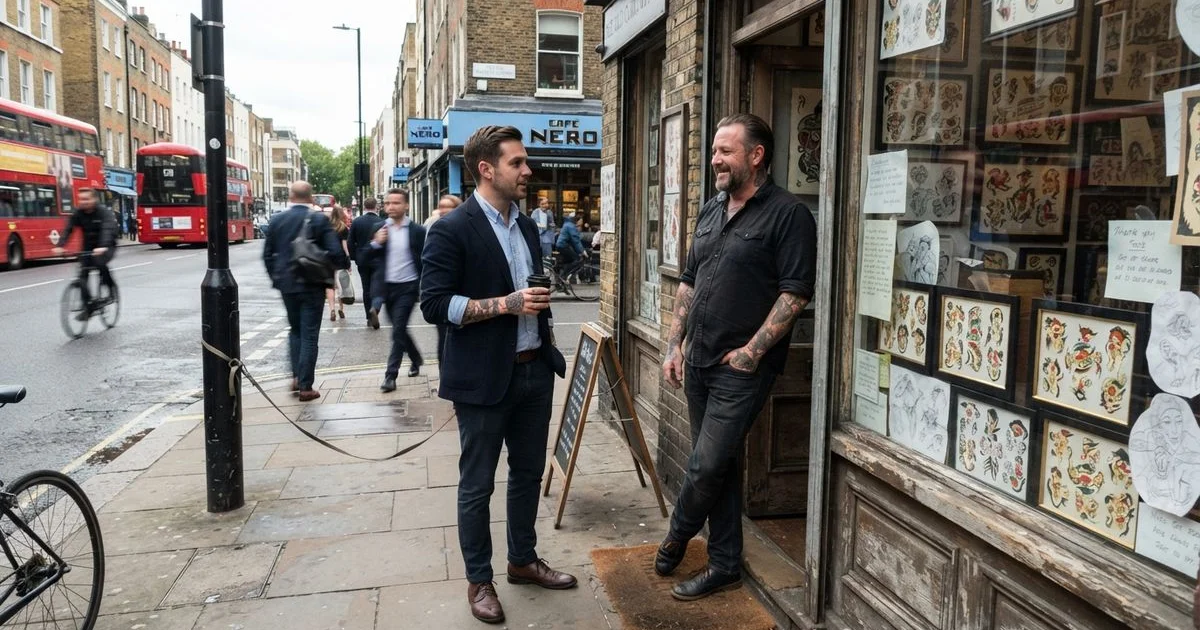
Attitudes toward visible tattoos in UK workplaces have shifted a lot over the past couple of decades, but they haven’t disappeared entirely, and policies still vary widely by industry and individual employer. If you’re planning a visible piece, it’s worth thinking through the career angle alongside the design itself.
What employers can and can’t require
UK employers are generally allowed to set reasonable dress code and appearance standards, which can include restrictions on visible tattoos, as long as those policies are applied consistently across staff and don’t unlawfully discriminate against a protected characteristic. This gives employers real latitude, so a workplace ban on visible tattoos in certain roles is usually lawful, even if it feels outdated in a more casual industry.
That said, enforcement and attitudes have relaxed considerably in many sectors, and outright bans are less common than they once were, especially outside more formal or client-facing environments.
How this tends to vary by industry
| Industry type | Typical attitude toward visible tattoos |
|---|---|
| Creative, tech, hospitality, retail | Generally relaxed, often no issue at all |
| Corporate, finance, law | More conservative, especially in client-facing roles |
| Healthcare, emergency services | Varies by employer and role, sometimes stricter for hygiene or uniform reasons |
| Public-facing government or formal roles | Often more conservative, policy-dependent |
These are general patterns, not guarantees. Individual employer policy matters more than industry stereotype, so if you’re currently employed and concerned, checking your employee handbook or asking HR directly beats guessing.

Placement and career flexibility
If your career path isn’t fixed, or you’re not sure what industry you’ll end up in long-term, placement is worth thinking about alongside the design itself. Areas easily covered by standard clothing, the torso, upper arms, thighs or back, give you the flexibility to cover up for a specific role or interview without needing to alter the tattoo itself. Hands, neck and face tattoos are visible regardless of what you wear, which is a bigger commitment if your career direction is still uncertain.
This isn’t a reason to avoid visible placements if that’s genuinely what you want. It’s simply a factor worth weighing consciously rather than discovering the consequences after the fact. If smaller, easy-to-cover work appeals to you anyway, our guide on fine line tattoo placement and longevity covers which spots hold detail best while staying easy to hide.
If you’re already employed
If you’re currently in a role and thinking about a visible tattoo, a quick check of your employee handbook, or a low-key conversation with HR, tells you exactly where you stand before you commit to anything permanent. Most employers are more transparent about this than people expect, and it’s a far easier conversation to have in advance than to deal with afterward.
Job interviews and visible ink
Interviews are a slightly different situation from an existing job, since you’re being judged on a first impression rather than an established track record. Some people choose to cover a visible tattoo for an interview and reveal it once they’ve settled into a role and its actual culture, while others treat an employer’s reaction to visible ink as useful information about whether the workplace is a good fit in the first place. Neither approach is wrong; it depends on the industry, the role, and how much the specific job matters to you.
If you’re job-hunting in a more conservative sector, it’s worth researching the company’s general culture beforehand, through its website, social media, or people you know who work there, rather than assuming every firm in that industry has the same policy.
Uniform and client-facing roles sometimes have specific appearance requirements written into the contract itself, rather than a general dress code policy, so it’s worth reading the actual terms if you’re unsure rather than relying on what colleagues have told you informally. Policies can also differ between customer-facing and back-office roles within the exact same company, so the department you’re in matters as much as the industry overall. Asking a direct, practical question during the interview process is generally better received than assuming and being caught out later.
Browse London studios from the home page once you’ve settled on a design and placement that works for your situation, and read about how we assess studio professionalism on the scoring method page.
FAQ
- Can a UK employer legally ban visible tattoos?
- Generally, yes, within reason. Employers can set reasonable dress code and appearance policies, including rules about visible tattoos, as long as they're applied consistently and don't discriminate unlawfully against a protected characteristic. Attitudes have relaxed considerably in many industries, but policies still vary a lot by sector and employer.
- Which industries tend to be stricter about visible tattoos?
- Client-facing roles in more formal sectors, such as law, finance, and some corporate environments, tend to have stricter policies than creative industries, hospitality, or retail, where visible tattoos are increasingly common and rarely an issue. Policies also vary a great deal between individual employers within the same industry.
- Is it easier to get away with tattoos in certain placements?
- Placements easily covered by standard workwear, like the torso, upper arms or thighs, give you more flexibility across different jobs than hands, neck or face tattoos, which are visible regardless of clothing. This is worth weighing if your career path or plans are uncertain.
- Should I ask my employer's policy before getting a visible tattoo?
- If you're currently employed and concerned, checking your employee handbook or asking HR directly is a sensible step before committing to a highly visible placement. It's a much smaller conversation to have beforehand than after the fact.