Tattoos on mature skin: what changes with age and what to ask your artist
By Lena Vogel · Updated 2026-08-31
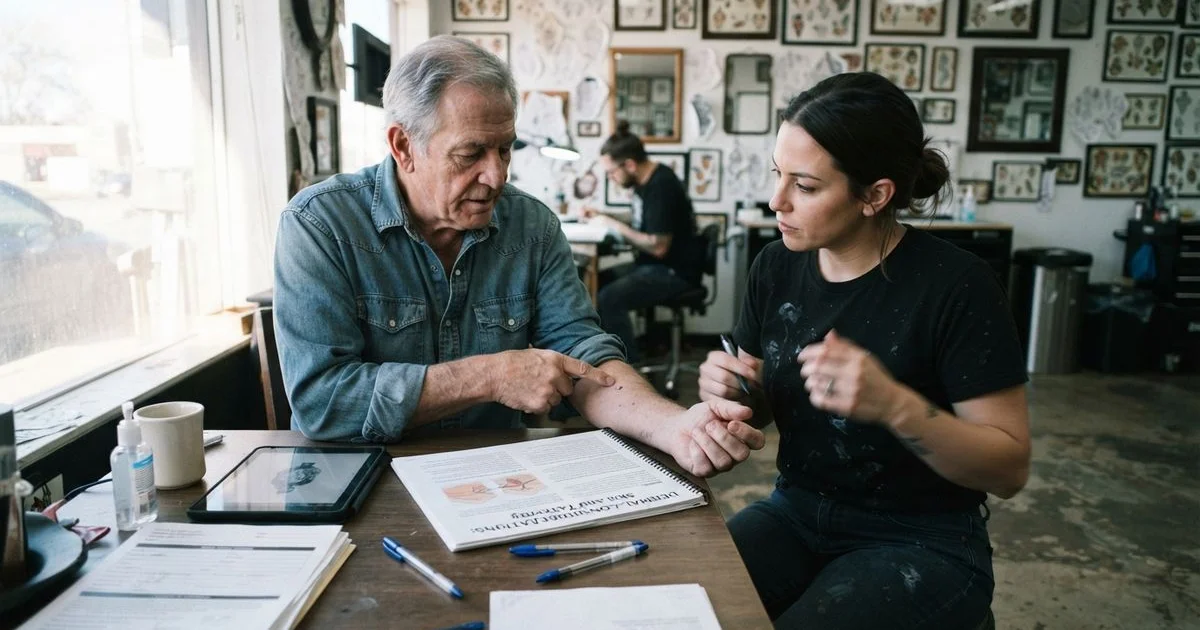
There’s no age at which it becomes too late to get a tattoo, and studios across London regularly work with clients well into later life. Skin does change with age in ways worth knowing about before you book, mostly around healing and how fine detail settles rather than anything that should put you off.
How skin changes affect tattooing
Skin naturally becomes thinner and loses some elasticity over the years, which can slightly change how ink sits and how the area heals compared with younger skin. This isn’t a reason to avoid getting tattooed, but it’s part of why an experienced artist working with an older client might adjust needle depth or technique slightly, and why healing can vary a bit more from person to person at this stage of life.
| Consideration | What it means in practice |
|---|---|
| Skin elasticity | Can affect how tightly fine detail holds over time |
| Skin thickness | May influence needle depth and technique choices |
| Healing pace | Can vary more individually; usually still well within normal ranges |
| Medications | Blood thinners and some other common medications affect bruising and bleeding |
None of these are reasons to rule out a tattoo. They’re simply things worth raising at consultation so your artist can plan the session with your specific skin and health in mind.

What to mention at consultation
Beyond the usual questions about design and placement, it’s worth being upfront about any medications you take regularly, particularly blood thinners, since these can affect bleeding and bruising during the session. Any skin conditions, past surgeries near the intended placement, or slower healing you’ve noticed with other injuries are also worth mentioning. A good artist will ask, but raising it yourself if they don’t ensures nothing gets missed.
Choosing designs that suit the skin you have now
Very fine, densely packed detail can soften slightly faster on skin with reduced elasticity, in much the same way fine lines fade faster in high-friction spots on any skin type. This doesn’t rule out detailed work, it just means a slightly bolder approach to fine linework, or placement on an area with firmer skin, can help a design hold its sharpness for longer. An honest conversation with your artist about how a specific design is likely to age on your skin is worth more than assuming every design works identically regardless of age.
What happens to tattoos you already have
If you’re carrying tattoos from decades ago, it’s normal to notice some softening, blurring or colour fading over time, more from the natural passage of years than anything specific to ageing skin. This is a common reason people return for a touch-up or consider reworking an old piece into something new entirely. If an older tattoo has faded or blurred more than you’d like, a consultation to look at refresh or rework options is worth having, since what’s possible depends heavily on how much ink is still visibly present in the skin.
Weight changes over the years can also affect how an existing tattoo looks, particularly on areas of the body more prone to gradual change. This isn’t something to worry about in advance when planning a new piece, but it’s a reasonable thing to mention to your artist if you’re weighing up placement for a design you want to look consistent over a long period, since some spots naturally hold their original shape better than others. Your artist has usually seen enough long-term healed work to give you an honest, practical answer, and a good one won’t mind being asked directly about how a design is likely to hold up decades from now.
It’s a personal decision, not a countdown
Plenty of people get their first tattoo well into their 50s, 60s or later, often after years of thinking it over. There’s nothing about age itself that should rule out a tattoo you actually want; it just means a slightly more detailed conversation at consultation than a younger client might need.
Browse London studios from the home page, and see how we weigh consultation care and professionalism in our scoring method.
FAQ
- Is there an upper age limit for getting a tattoo?
- No. There's no legal upper age limit for tattoos in the UK, only the minimum age of 18. Studios regularly tattoo clients well into their 60s, 70s and beyond, though some may ask about general health and any medications that affect healing or bleeding.
- Does older skin heal differently from younger skin?
- Skin naturally thins and loses some elasticity with age, which can affect how ink settles and how quickly the area heals. It doesn't mean healing is worse, just that some artists adjust technique slightly and healing times can vary a little more person to person.
- Should I mention medications to my artist before booking?
- Yes. Blood thinners and certain other medications, more commonly taken later in life, can affect bleeding and bruising during a tattoo. Mentioning any medications at consultation lets your artist plan the session accordingly, and in some cases they may suggest checking with your GP first.
- Do fine details hold up as well on older skin?
- Very fine, densely packed detail can soften slightly faster on skin with reduced elasticity, similar to how it fades faster in high-friction areas at any age. A slightly bolder approach to fine detail is something worth discussing with your artist if this is a concern.