Getting your first tattoo in London: a beginner's guide
By Lena Vogel · Updated 2026-07-20
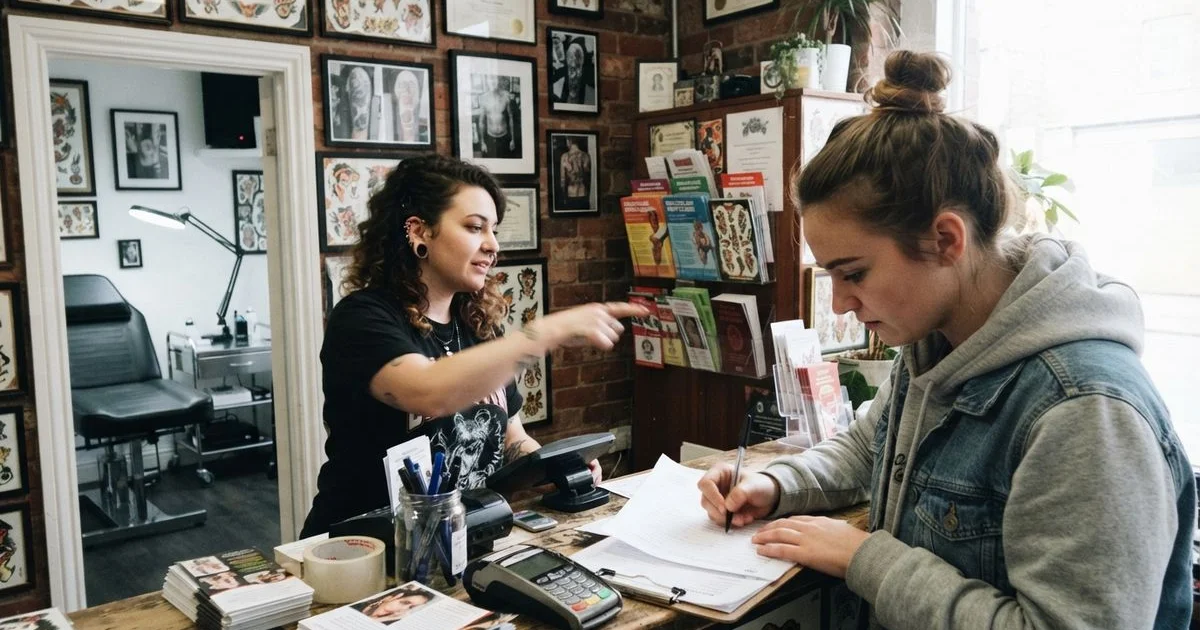
Getting your first tattoo means a lot of small decisions stacked on top of one big one. Which style, which artist, how big, where on your body, and whether you’re ready to commit to something permanent. None of that needs to be stressful if you take it in order.
Start with the style, not the artist
Before you search for a studio, get clear on what you actually want. Fine line and minimalist work suits small, delicate pieces like lettering or a botanical outline. Traditional and old school leans on bold lines and solid colour that holds up well over decades. Black and grey realism is built for portraits and detailed shading. Japanese and Irezumi-style work tends to be larger and more composition-led from the start. Fine line and minimalist designs are a reasonable starting point if you’re after something small and understated, since it’s one of the more requested looks for a first tattoo in the city.
Once you’ve settled on a rough style, look at artist portfolios within that style specifically. An artist can be brilliant at bold traditional work and mediocre at fine line, or the other way round. Scroll past their best single photo and look at a wider run of work, ideally healed pieces rather than only fresh ones straight off the machine.
What the consultation actually covers
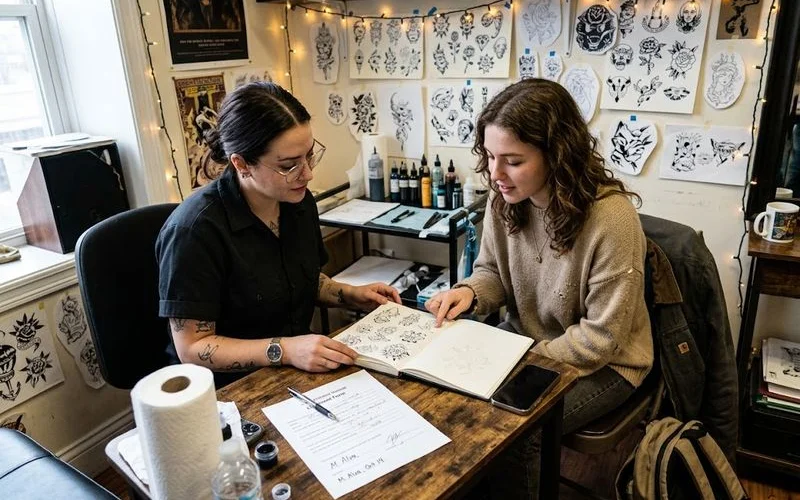
Most studios in London want a consultation before any custom work, either in person, by email or over a call. A proper one covers your reference images, rough size, placement, and roughly how many sessions the piece might take. A good artist asks about your skin tone, any tattoos already nearby, and how the design is likely to age on the spot you’ve chosen. They should also be upfront about pricing before you commit to anything.
Bring loose or easily adjustable clothing for the area you’re getting tattooed, eat a proper meal beforehand, and skip alcohol the night before since it thins the blood and can make the session harder to sit through.
What to expect on the day
Here’s a rough shape of a first appointment, small custom or flash piece:
| Stage | What happens | Typical time |
|---|---|---|
| Check-in | ID check, consent form, final placement chat | 10-15 minutes |
| Stencil | Design printed and placed on skin for approval | 10-20 minutes |
| Tattooing | Linework first, then shading or colour if included | 30 minutes-2 hours |
| Aftercare talk | Wrapping and written healing instructions | 5-10 minutes |
Small, simple pieces are often done in a single sitting under an hour. Anything larger or more detailed will run longer or need more than one session, and a good artist will tell you that at the consultation stage rather than partway through.
Picking a placement you won’t regret
First tattoos often go on the forearm, upper arm, calf or shoulder: visible enough to enjoy, easy to cover for work if needed, and relatively comfortable to sit through compared with ribs, hands or feet. If you’re unsure, ask your artist how the design will look in five or ten years on that spot specifically, since skin, sun exposure and natural stretching all affect how ink settles over time. Skin keeps changing well beyond your twenties, so it’s worth a look at our guide on tattoos on mature and ageing skin if you’re picking a placement you want to hold up decades from now.
Nerves are normal
Feeling anxious before a first tattoo is common, even among people who end up getting several more afterwards. A studio that takes time to talk you through the process, checks in during the session, and doesn’t rush you into a decision on the day is worth more than one that just wants you in and out quickly. Across the studios we cover, the most consistent praise in reviews isn’t about a single flashy design, it’s about staff who put nervous first-timers at ease and explain what’s happening as they go. That pattern is worth paying attention to when you’re comparing options. You can read more about how we weigh review consistency and studio professionalism across London on our scoring method page.
It also helps to bring a friend if the studio allows it. Having someone else in the room, even just in the waiting area, takes some of the pressure off, and a second pair of eyes on the stencil placement before you commit is genuinely useful. If a studio seems reluctant to let you take your time approving the stencil, that’s worth noticing.
Once you’ve had one done, most of the anxiety about the next one tends to fade, since you already know roughly what to expect. The London Tattoo Shop Guide home page is a good next stop for browsing studios by style once you’ve settled on the design you want.
FAQ
- Does a first tattoo hurt a lot?
- It varies by placement and pain tolerance. Fleshy areas like the outer arm or thigh are usually more comfortable than bony spots like ribs, hands or feet. Most people describe it as uncomfortable rather than unbearable, and sessions for a small first piece are often over within an hour.
- How do I pick the right artist for a first tattoo?
- Look at healed work in the style you want, not just fresh photos straight off the machine. A studio that asks about placement, sizing and how the design will age is a good sign, and a proper consultation before booking matters more than how polished someone's Instagram feed looks.
- Can I walk in for my first tattoo or do I need to book ahead?
- Both exist in London. Walk-ins suit small, simple flash pieces, while custom designs usually need a consultation first and a booked appointment a few days or weeks out. If you're nervous, a booked slot gives you time to think it through rather than deciding on the spot.
- What should I bring to my first appointment?
- ID if you look under 25 (most studios ask), reference images or a rough idea of the design, and something to eat beforehand. Loose clothing that gives easy access to the placement area helps, and it's worth avoiding alcohol the night before since it thins the blood.