Tattoo ink allergies and skin sensitivities: what to know first
By Lena Vogel · Updated 2026-08-19
This is general information, not medical advice. If you suspect an allergic reaction or have a skin condition that concerns you, speak to a pharmacist or GP.
Most people get tattooed without any reaction beyond normal healing. Ink allergies are uncommon, but knowing the signs and being upfront about your skin history at consultation reduces the risk of an unpleasant surprise.
Which colours are most linked to reactions
Red ink has historically been the colour most associated with allergic reactions, partly due to certain pigments used to achieve a bright red tone. Yellow and other bright colours have also been linked to reactions in some cases, generally less often than red. Black ink, the most commonly used colour overall, causes reactions far less frequently.
This doesn’t mean avoid colour entirely, it means being aware that a reaction, if one happens, is more likely to show up specifically in the coloured sections of a design rather than across the whole piece.
Telling normal healing apart from an allergic reaction
| Normal healing | Possible allergic reaction |
|---|---|
| Mild redness and warmth in the first few days | Redness that persists well beyond normal healing time |
| Itching as scabs form and peel, days 4-14 | Itching that’s severe, raised or confined to one ink colour |
| Even swelling that settles within days | Swelling that’s localised to specific colours and doesn’t ease |
| Peeling skin, generally flat once removed | Raised, bumpy or textured skin over coloured areas specifically |
If a reaction seems confined to certain colours within the design rather than spread evenly across the whole tattoo, that’s a stronger signal of a genuine ink sensitivity rather than typical healing irritation.
Reducing your risk before you book
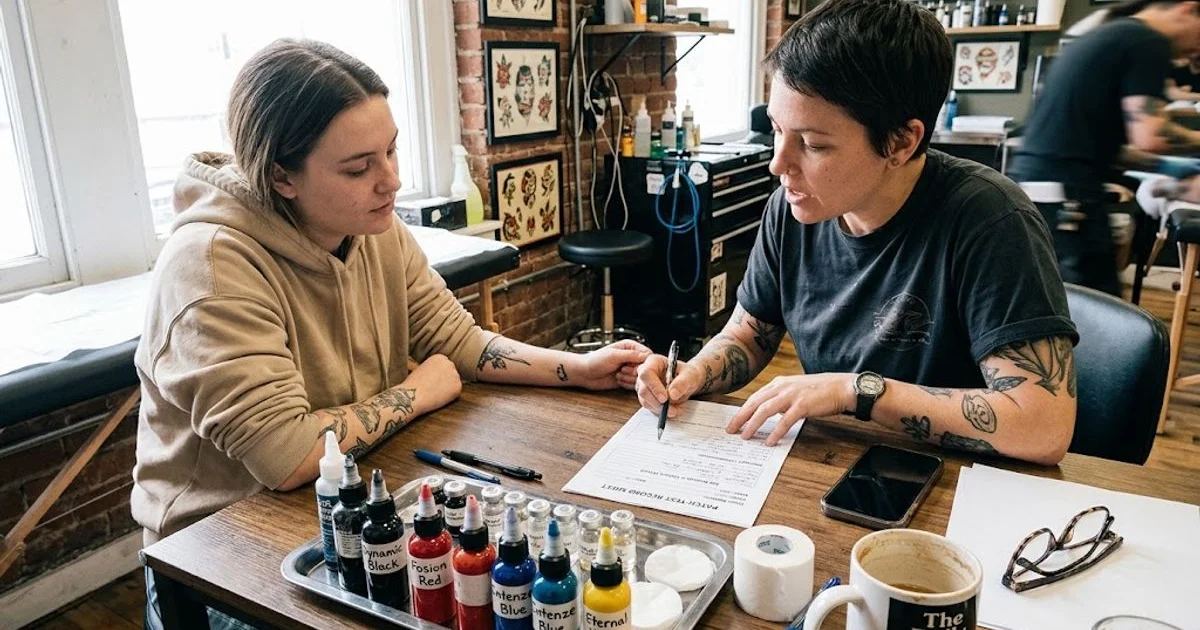
If you have a known history of skin allergies, eczema, psoriasis or keloid scarring, mention it at your consultation even if the artist doesn’t ask directly. Some studios will do a small patch test with the specific ink beforehand if you’re concerned, particularly for larger pieces where a reaction would affect more of the design. It’s a reasonable thing to request, and a studio that takes the question seriously rather than brushing it off is a good sign generally.
Using reputable, professionally sourced ink is also part of the equation, which is one more reason licensing and hygiene standards matter beyond just needle sterilisation.
Reactions that show up later
Not every reaction appears in the first healing weeks. Some people develop sensitivity to a specific ink colour months or even years after getting a tattoo, sometimes triggered by unrelated factors like sun exposure or a change in skin condition. This is less common than an early reaction but worth knowing about, since a sudden change in how an old tattoo looks or feels, particularly raised or itchy patches confined to one colour, is still worth mentioning to a pharmacist or GP even long after the original appointment.
If you’ve had a reaction to one tattoo, it doesn’t automatically mean every future tattoo will cause the same problem, but it’s worth flagging clearly to any artist you see afterward. Mentioning the specific colour or ink brand involved, if you know it, gives them useful information to work around, and some artists keep records of ink batches used, which can help identify a likely cause if you’re trying to figure out what triggered a reaction. That kind of record-keeping is a quiet sign of a well-run, careful studio, and it’s a reasonable thing to ask about even if you’ve never had a reaction before.
If you think you’re having a reaction
Persistent redness, raised itchy patches confined to certain colours, or swelling that isn’t easing after the first week or so are worth getting checked by a pharmacist or GP rather than waiting it out. Most reactions, when they do happen, are manageable, but getting an early diagnosis matters more than guessing.
Compare London studios and their approach to consultation and aftercare from the home page, and read about how we weigh hygiene and professionalism in reviews on the scoring method page.
FAQ
- How common are tattoo ink allergies?
- They're uncommon relative to how many tattoos are done safely every year, but not unheard of. Red ink is the colour most frequently linked to allergic reactions, historically due to certain pigments used to create it, though reactions can occur with other colours too.
- What does an allergic reaction to tattoo ink look like?
- Persistent redness, raised or itchy skin confined to the coloured areas of the design, and swelling that doesn't settle within the normal healing window are the main signs. Unlike normal healing irritation, an allergic reaction tends to be limited to specific ink colours rather than the whole tattoo.
- Can I get a patch test before a full tattoo?
- Some studios offer a small patch test with the specific ink beforehand, particularly if you have a known history of skin allergies. It's worth asking directly, since not every studio offers this as standard, but a reasonable one will accommodate the request.
- Should I tell my artist about existing skin conditions before booking?
- Yes. Conditions like eczema, psoriasis or a history of keloid scarring can affect how skin reacts to tattooing and heals afterward. A good artist will ask about this at consultation, but mentioning it upfront if they don't is worth doing regardless.