Tattoo aftercare and healing: a step-by-step guide
By Lena Vogel · Updated 2026-07-29
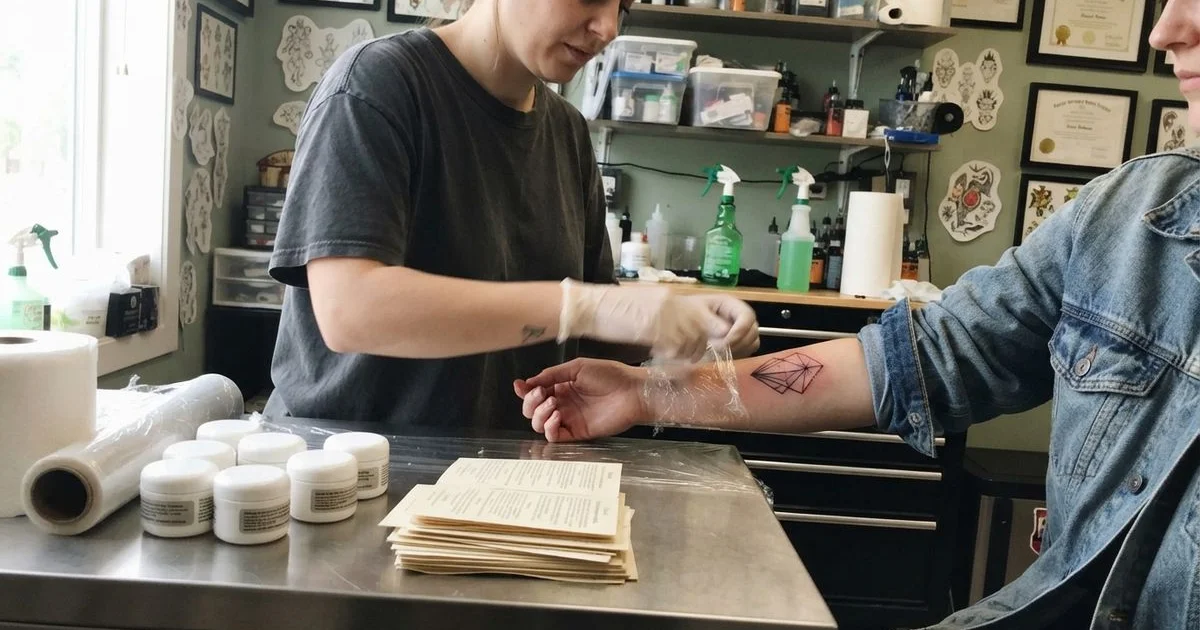
How you look after a tattoo in the days and weeks afterward affects how it looks for the rest of your life. Most problems people run into aren’t down to the artist’s work, they’re down to aftercare mistakes in that first month.
This is general guidance, not medical advice. If you notice signs of infection, speak to a pharmacist or GP.
The healing timeline
Healing happens in overlapping stages rather than a single clean process:
| Stage | Roughly when | What’s happening |
|---|---|---|
| Open and oozing | Days 1-3 | Plasma and excess ink seep out; keep it clean and lightly covered |
| Scabbing and peeling | Days 4-14 | Surface skin flakes and peels; itching is common |
| Surface healed | Weeks 2-4 | Skin looks mostly normal but is still fragile underneath |
| Deep healing | Weeks 4-12 | Colour and sharpness settle fully; avoid heavy sun exposure |
Every tattoo heals slightly differently depending on size, placement and your own skin, so treat this as a rough guide rather than a strict schedule.
What to do in the first two weeks
Follow whatever specific instructions your studio gives you first, since aftercare advice can vary slightly between artists. As a general pattern:
- Leave the initial wrap on for the time your artist recommends, then wash gently with fragrance-free soap and lukewarm water.
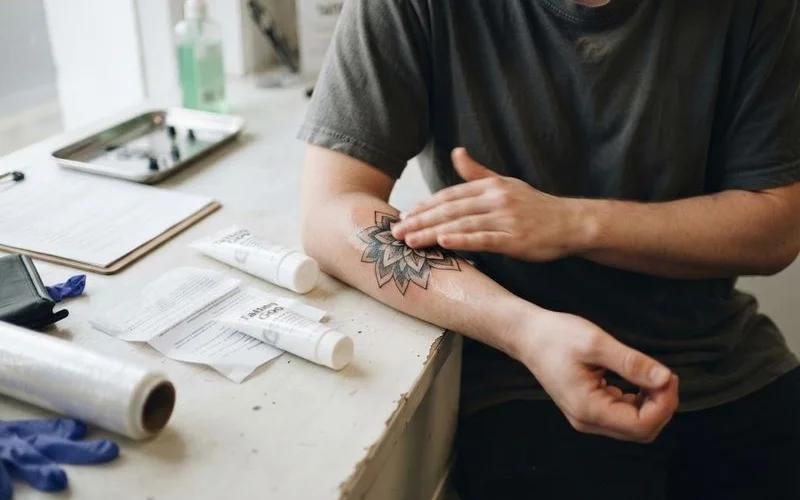
- Pat dry, never rub, and apply a thin layer of the aftercare product your studio recommends, a few times a day.
- Avoid soaking the area (baths, pools, the sea, hot tubs) until it’s fully healed.
- Keep it out of direct sun, and once healed, use a high-SPF sunscreen on it indefinitely, since UV exposure fades ink faster than almost anything else.
- Wear loose clothing over the area to avoid friction while it’s still tender.
Common healing mistakes
Picking at scabs or peeling skin is the single most common way people damage a healing tattoo, sometimes pulling out ink and leaving patchy spots that need a touch-up later. Over-moisturising is another frequent issue: too much product can trap moisture against the skin and slow healing rather than help it. A thin layer, applied a few times a day, does more good than a thick one applied once.
Re-covering a healing tattoo with a tight bandage for longer than recommended can also trap sweat and bacteria, which raises irritation risk rather than protecting it.
Choosing an aftercare product
Most studios recommend a fragrance-free, gentle moisturiser or a specialist aftercare balm during the first couple of weeks, then switching to a regular unscented lotion once the surface has healed. Avoid products with heavy fragrance, alcohol, or harsh active ingredients while the skin is still healing, since these can irritate fresh tattoo work. Your artist will usually recommend a specific product or type at your appointment, and it’s worth following their advice rather than substituting whatever’s already in your bathroom cabinet, since not every moisturiser is suited to healing skin.
Clothing choice during the healing weeks matters more than people expect too. Loose, breathable fabric over the tattooed area reduces friction and lets the skin breathe, while tight clothing can trap sweat and slow healing, particularly in warmer months. If the placement is somewhere that rubs against a bag strap, waistband or seatbelt during your normal day, planning around that for the first couple of weeks is worth the minor inconvenience.
When to get it checked
Some redness, mild swelling and warmth around the tattoo in the first day or two is a normal part of the body’s response, not a red flag on its own. What’s worth getting checked by a pharmacist or GP: redness that spreads outward rather than settling, pain that gets worse after the first few days instead of easing, visible pus, red streaking away from the tattoo, or a fever. These aren’t common, but catching them early matters more than waiting to see if it improves on its own. Some of these signs can also point to an ink allergy rather than an infection; our guide on tattoo ink allergies and skin sensitivities explains how to tell the difference.
Studios that give clear written aftercare instructions and answer follow-up questions if something looks off are worth factoring into your decision, alongside portfolio and pricing. You can read more about how we weigh review patterns like aftercare guidance on our scoring method page, and browse studios across London from the home page.
FAQ
- How long does a tattoo take to fully heal?
- The surface usually looks healed within 2-3 weeks, but the deeper layers of skin keep settling for up to 2-3 months. Colour and detail can still shift slightly during that longer window, which is why studios ask you to wait before judging the finished result.
- Is peeling and itching normal?
- Yes, both are a normal part of the healing process, usually starting around days 4-7. Scratching or picking at peeling skin risks pulling out ink, so pat or gently slap the area instead if it itches badly, and keep it moisturised.
- When should I actually worry about infection?
- Some redness, warmth and mild swelling in the first couple of days is normal. Spreading redness beyond the tattoo, increasing pain after the first few days, pus, red streaking, or a fever are signs to get it checked by a pharmacist or GP rather than waiting it out.
- Can I go swimming or use a sauna while healing?
- Avoid both until the tattoo is fully healed, generally 2-4 weeks minimum. Submerging fresh ink in pools, the sea or hot tubs raises infection risk, and heat and sweat from saunas can irritate healing skin.