When a tattoo goes wrong: your rights and options in the UK
By Lena Vogel · Updated 2026-09-06
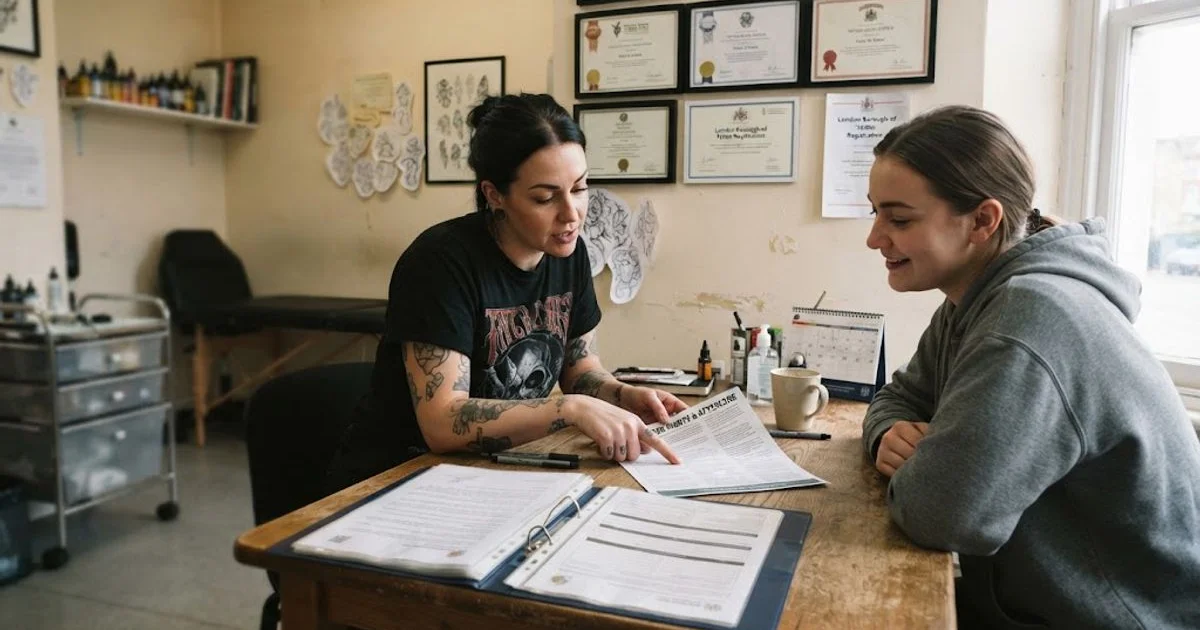
This is general information about UK consumer rights, not legal advice. For guidance on a specific situation, contact Citizens Advice or a legal professional.
Most tattoos in London go smoothly, but if something does go wrong, whether that’s a technical mistake, a hygiene failure, or a result that doesn’t match what was agreed, it helps to know where you actually stand.
Your basic consumer rights
Tattooing is a paid service, which means it falls under the Consumer Rights Act 2015 in the UK. This law requires services to be carried out with reasonable care and skill, and within a reasonable time, based on what was agreed. If a studio clearly fell short of that standard, whether through poor technique, a hygiene failure, or work that doesn’t match what was discussed at consultation, you have a legitimate basis to raise it.
This doesn’t mean every result you’re personally unhappy with counts as the studio’s fault. A tattoo done competently, following the design and placement you agreed to, isn’t a legal issue just because you’ve changed your mind afterward.
Genuine problems vs personal preference
| Likely a genuine issue | Likely personal preference |
|---|---|
| Noticeable scarring from poor technique | A design that looks slightly different from your imagination |
| Infection linked to poor hygiene practices | Minor fading that’s part of normal healing |
| A design significantly different from what was agreed | Regretting a decision made calmly and with full information |
| Uneven linework clearly below reasonable skill standard | A style choice you’re less keen on after living with it |
If you’re unsure which category your situation falls into, an honest conversation with the studio is usually the best starting point, since most professional artists can tell the difference too and will respond accordingly.

Steps to take if something’s wrong
- Get any health concern checked first. If there are signs of infection, see a pharmacist or GP before anything else.
- Document the issue. Clear photos, dated if possible, and a note of what was originally agreed help if you need to escalate later.
- Speak to the studio directly. Most reputable businesses want the chance to put things right, whether through a free touch-up, partial refund, or another resolution.
- Escalate if needed. If the studio won’t engage reasonably, Citizens Advice can advise on formal next steps, including small claims options for financial disputes.
Informal resolution vs a formal claim
Most disputes get resolved at the studio conversation stage, since a reasonable business would rather fix a genuine mistake than risk a formal complaint or a damaged reputation. Small claims court is generally a last resort, reserved for cases involving real financial loss, such as covering the cost of corrective work elsewhere, where the studio has refused any reasonable resolution. It’s rarely quick or free, so it’s worth trying every direct route first and keeping a clear paper trail of your attempts to resolve things, since that record matters if you do need to escalate further.
Keeping copies of any consultation notes, price quotes, and messages exchanged with the studio from the very start of the process makes this whole path smoother if you ever need it. Most people never need to use this kind of record, but having it costs nothing and means you’re not scrambling to reconstruct a timeline from memory if a genuine problem does come up later. It’s a habit worth building for any significant booking, not just when something feels uncertain from the start.
Why raising it matters, even for small issues
Beyond your own resolution, flagging a genuine problem, particularly a hygiene or technique issue, helps hold studios accountable to the standards that protect everyone booking in after you. Most London studios take feedback like this seriously, since their reputation depends on consistent quality, not just their best work.
Choosing a studio with a strong track record in the first place reduces the odds of running into a serious issue. Browse London studios from the home page, and read about how we weigh review consistency and professionalism in our scoring method page.
FAQ
- Do consumer rights laws apply to tattoos in the UK?
- Yes. Tattooing is a paid service, so the Consumer Rights Act 2015 applies, which requires services to be carried out with reasonable care and skill. If a studio clearly failed to meet that standard, you have grounds to raise a complaint.
- What counts as a tattoo genuinely going wrong versus just not liking the result?
- There's a real difference between a technical failure, like significant scarring, infection from poor hygiene, or a design that doesn't remotely match what was agreed, and simply not loving a tattoo that was executed competently and as discussed. The first has a stronger basis for a complaint; the second is more about managing expectations at consultation.
- What should I do first if something seems wrong?
- Speak to the studio directly and calmly explain the issue, ideally with photos. Most reputable studios want to resolve genuine problems, whether that's a touch-up, partial refund, or another remedy, and this is usually faster and less stressful than going further.
- When should I get a doctor involved?
- Immediately, if you notice signs of infection: spreading redness, increasing pain after the first few days, pus, red streaking or a fever. Health always comes first, and a GP or pharmacist visit shouldn't wait until after you've dealt with the studio.