Checking a tattoo studio's hygiene and licensing before you book
By Lena Vogel · Updated 2026-08-07
This is general information, not legal or medical advice. If you have specific health or regulatory questions, contact your local council or a healthcare professional directly.
Hygiene standards aren’t just a nice-to-have in tattooing, they’re a legal requirement, and checking them takes only a few minutes before you book. Most studios in London meet these standards without issue, but knowing what to check protects you either way.
The legal baseline
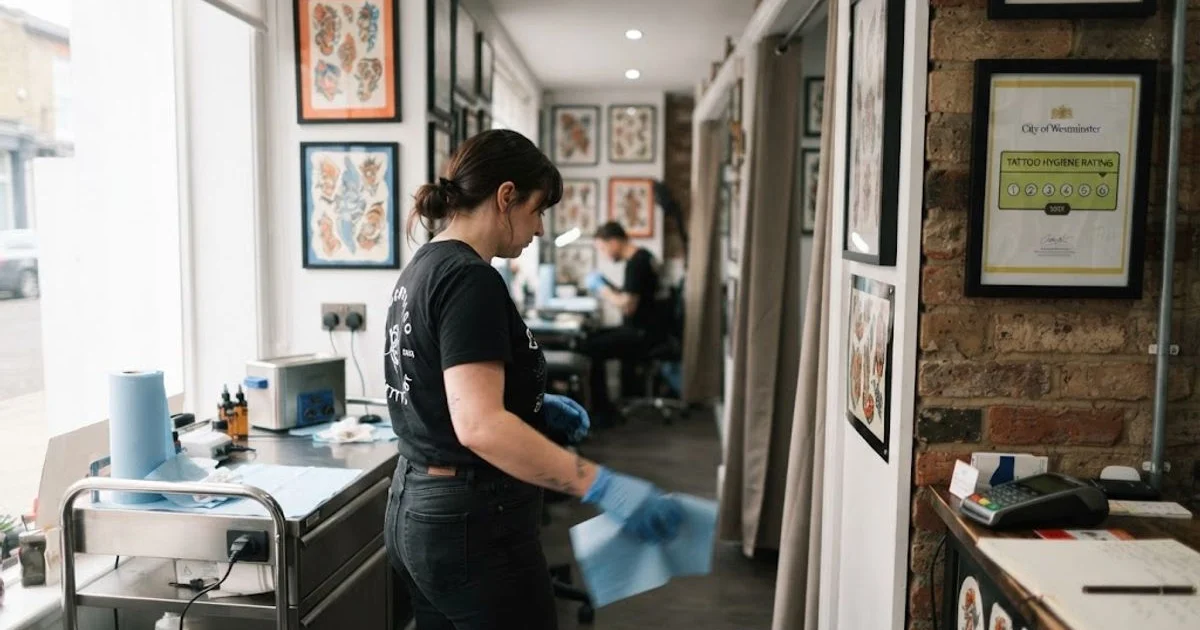
In the UK, any premises carrying out tattooing must be registered with the local council under public health and hygiene regulations. This registration process typically involves an inspection covering sterilisation procedures, waste disposal, and general cleanliness of the premises. It applies to the business, and often to individual practitioners working there.
This registration is separate from a studio’s reputation or review score. A studio can have glowing reviews and still be expected to meet these baseline legal standards, and checking registration takes the guesswork out of the hygiene question before you ever set foot inside.
How to check before you book
| Step | How to do it |
|---|---|
| Search the local council register | Most London councils list registered tattoo and body art premises on their website |
| Ask the studio directly | A legitimate business should confirm its registration without hesitation |
| Look for visible certificates | Some studios display registration or hygiene certificates in the reception area |
| Check how equipment is stored | Ask whether needles are single-use and where reusable tools are sterilised |
If a studio is vague or evasive about any of this, treat it as a reason to look elsewhere rather than pushing past it.
What to look for once you’re in the studio
A few concrete things you can check on the day, without needing any technical knowledge:
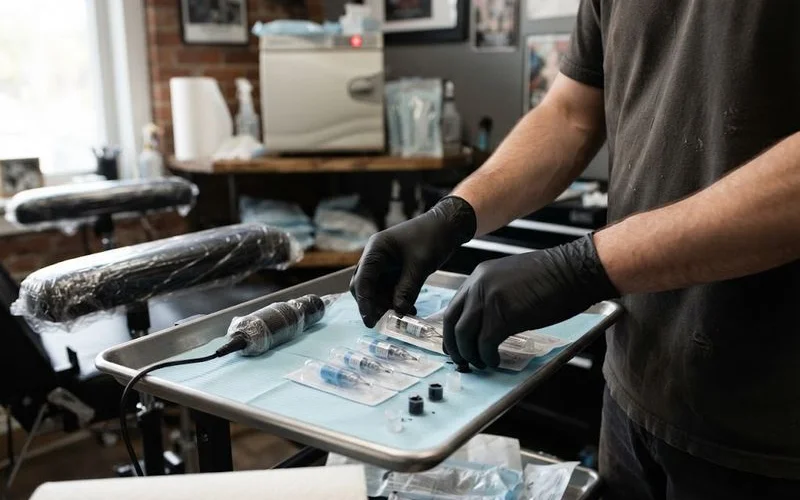
- Needles and ink caps should be opened from sealed, single-use packaging in front of you, not pre-opened before you arrive.
- Reusable equipment (like tattoo machine grips) should show evidence of proper sterilisation, commonly through an autoclave that uses pressurised steam to kill bacteria and pathogens.
- The artist should put on fresh gloves immediately before starting, and change them if they touch anything outside the immediate work area mid-session.
- Surfaces should be wiped down and covered with disposable barriers before each client.
None of these checks require confrontation. A quick, casual question like “is this a new needle?” or “how do you sterilise your equipment?” is a completely normal thing to ask, and any professional studio will answer without making it awkward.
What council registration actually checks
Registration inspections typically look at how a premises manages sterilisation of reusable equipment, how single-use items are stored and disposed of, general cleanliness of workstations, and whether staff follow documented hygiene procedures. It’s a practical, premises-level check rather than a rating of an artist’s creative skill, which is exactly why it’s worth treating as a separate question from portfolio quality. A studio can have brilliant artists and still fall short on hygiene basics if it’s poorly managed, which is part of why checking both independently matters.
Registration status can also change over time, so a studio that was properly registered years ago isn’t automatically still compliant today. If it’s been a while since you last checked a council’s register, or you’re booking somewhere entirely new to you, a quick fresh search takes less time than the appointment itself and removes any doubt before you commit.
Why this matters more than it might seem
Poor hygiene practices carry a real risk of bloodborne infections like hepatitis B and C, as well as more common bacterial skin infections. These risks are rare at properly registered, professionally run studios, but they’re not zero, which is exactly why the registration system and visible hygiene practices exist in the first place. If a studio does let you down despite these checks, our guide on when a tattoo goes wrong covers your rights and options in the UK.
Taking five minutes to check a studio’s registration and hygiene setup before you book costs you nothing and removes one of the few genuinely serious risks in an otherwise low-risk process. Compare London studios from the home page, and read more about how our review-based scoring factors in cleanliness and professionalism on the scoring method page.
FAQ
- Do all tattoo studios in London have to be registered?
- Yes. Under UK law, any premises offering tattooing must be registered with the local council, and this typically covers the business, the individual practitioners and the premises itself. This is separate from any personal reputation or reviews and is a baseline legal requirement.
- How can I check if a studio is properly registered?
- Local councils maintain registers of licensed tattoo, piercing and body art premises, usually searchable on the council's website. You can also simply ask the studio directly. A legitimate business will have no issue confirming its registration.
- What hygiene signs should I look for in person?
- Single-use disposable needles opened in front of you, a visible autoclave or evidence of proper sterilisation for reusable equipment, clean surfaces and fresh gloves put on right before the session starts are all good signs. An artist who reuses gloves between tasks or doesn't open needle packaging in view is a red flag.
- Does a clean-looking studio guarantee good hygiene practices?
- Not entirely. A tidy space is a good sign but not proof on its own. Proper registration, visible sterilisation practices, and single-use equipment opened in front of you matter more than aesthetics alone.