Planning a Japanese Irezumi tattoo: what a full project involves
By Lena Vogel · Updated 2026-08-01
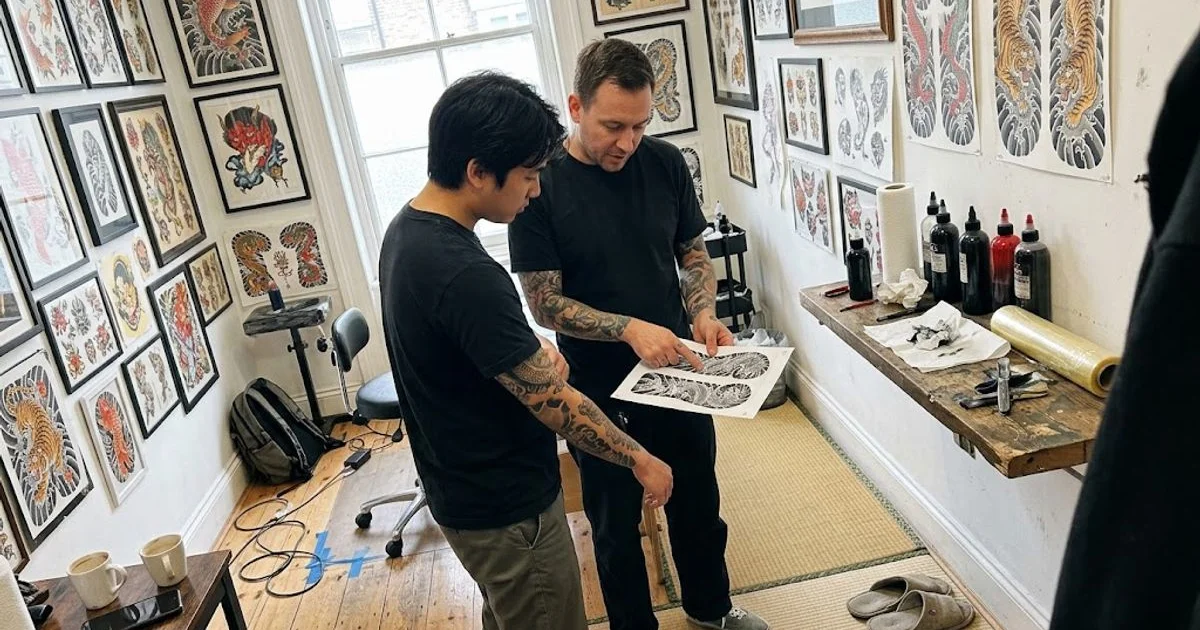
A traditional Japanese-style tattoo, often described as Irezumi, is less a single tattoo and more an ongoing composition. Waves, koi, dragons, cherry blossom and clouds are laid out to flow around the body as one connected piece, which changes how you plan the whole project compared with a smaller standalone design.
Why this style starts with a bigger conversation
Because Irezumi pieces are built around composition rather than a single isolated image, the planning stage covers more ground than a typical consultation. Expect your artist to talk through the whole concept even if only one section, say a forearm panel, gets tattooed first. They’ll usually sketch how the piece is meant to flow if it eventually extends further, so later additions connect naturally rather than looking bolted on.
This is also where you’ll settle on scale and pacing. Some clients commit to a full sleeve or back piece from the outset; others start smaller and decide whether to extend once they’ve lived with the first section for a while.
What a project timeline actually looks like
| Stage | What happens | Typical timing |
|---|---|---|
| Concept and planning | Full composition discussed, even if starting small | 1-2 meetings |
| First session | Outline and major linework for the first section | 3-6 hours |
| Follow-up sessions | Shading, colour, background elements built up | Every few weeks |
| Completion | Final detailing and touch-ups | Months to over a year total |
Session spacing usually depends on how the skin heals between sittings, generally a few weeks apart for larger continuous work, and how quickly your artist’s schedule allows bookings.
Choosing an artist for this specific style
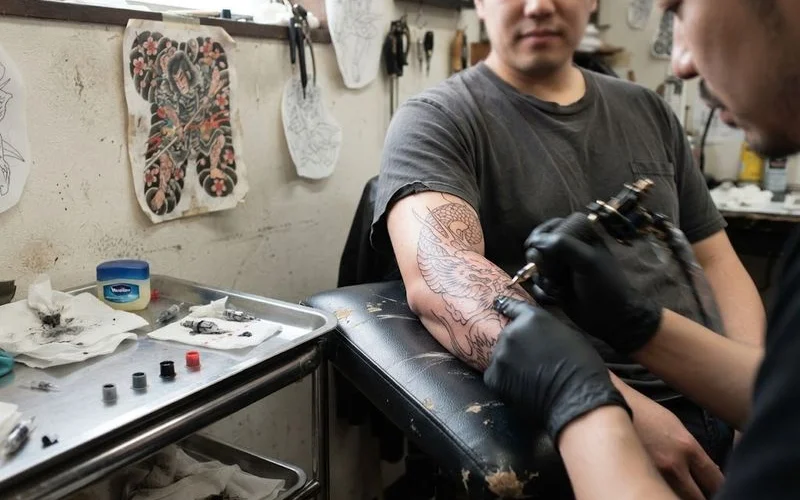
Traditional Japanese tattooing is its own specialism, distinct from general custom work, so portfolio evidence matters more here than almost anywhere else. Look for artists whose composition flows convincingly around the body rather than reading as a flat, front-facing image, and check healed photos of larger pieces specifically, since colour saturation and line weight in this style need to hold up over years, not just look sharp when fresh. Browsing Japanese and Irezumi-style specialists in London is a reasonable way to shortlist artists whose portfolios actually show large-scale, multi-session work rather than just single small pieces.
One thing worth asking early: whether the artist works purely by machine or also offers tebori, the traditional hand-poked technique. Both are legitimate approaches, but they produce a different texture and typically a different timeline.
Budgeting across a multi-year project
Because a large Irezumi piece is billed session by session rather than as a single upfront cost, it helps to think of the budget as an ongoing commitment rather than a one-off expense. Ask your artist for a rough per-session rate and an honest estimate of the total number of sessions, then map that against your own schedule and finances over the months or years the project is likely to take. Some clients space sessions further apart to manage cost, which is generally fine as long as the gaps between sessions on the same area don’t stretch so long that the overall composition loses momentum. Discussing pacing openly with your artist from the start avoids awkward conversations partway through the project.
It’s also worth thinking about how the piece fits around your work and travel schedule, since larger sessions can leave the area sore for a day or two afterward. Some clients deliberately book sessions a few weeks before a quiet period at work, or avoid scheduling one right before a holiday involving a lot of sun exposure, since healing skin needs to stay covered and protected while it settles.
Planning for the commitment
A project this size is as much a scheduling and budgeting decision as an artistic one. Talk to your artist early about a rough session count, spacing between appointments, and how pricing works across the whole project rather than session by session in isolation. You can compare how different London studios handle multi-session bookings on the home page, and read about how we weigh portfolio consistency in our scoring method.
FAQ
- How long does a full Japanese-style piece take to finish?
- A large piece like a half sleeve or back panel commonly takes anywhere from several months to well over a year, depending on how detailed the composition is and how often you can book sessions. Smaller Japanese-influenced pieces obviously take far less time.
- Do I need to stick with the same artist for the whole project?
- Most studios strongly recommend it. Irezumi-style work relies on a consistent composition flowing across the body, and switching artists partway through can create visible mismatches in linework and shading.
- What's the difference between machine work and tebori?
- Tebori is the traditional hand-poked technique, worked without an electric machine, and it produces a distinct texture some clients specifically want. Most contemporary Japanese-style tattoos in London are done by machine, which is faster, though a smaller number of specialists still offer tebori on request.
- Can I combine Japanese motifs with other styles?
- It's possible, but most artists working in this space recommend keeping a composition cohesive rather than mixing unrelated visual languages in one piece, since Irezumi relies heavily on how motifs flow together across the body.