How many sessions a large or detailed tattoo really takes
By Lena Vogel · Updated 2026-08-22
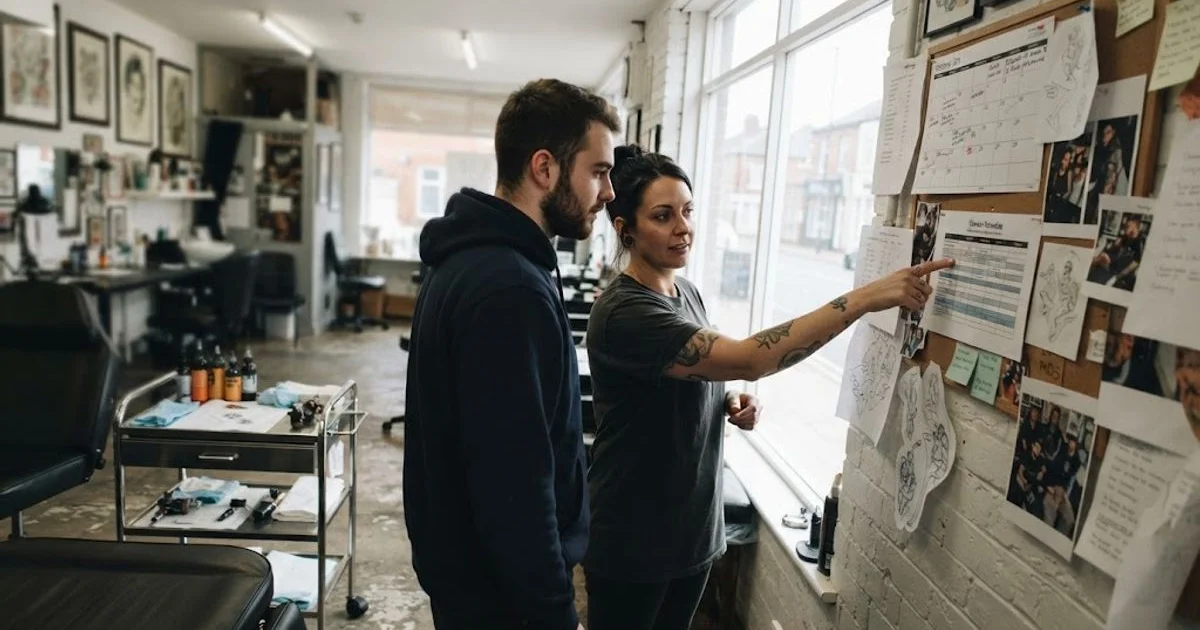
One of the most common surprises with larger tattoo projects isn’t the pain or the cost, it’s how long the whole thing actually takes. Getting a realistic sense of session count before you start helps you plan both your calendar and your budget properly.
What actually determines the session count
Size is the obvious factor, but detail level often matters more. A large but simple bold design can sometimes be finished faster than a smaller, highly detailed realism piece, because dense shading, fine linework and colour blending all take considerably longer per square inch than bold, flat coverage.
| Factor | Effect on session count |
|---|---|
| Overall size | More skin to cover generally means more time |
| Detail and shading | Fine detail and gradients take far longer than bold, simple designs |
| Colour work | Layering multiple colours adds time compared with single-tone pieces |
| Placement | Curved or joint areas can slow the pace compared with flat surfaces |
| Your pain tolerance | Shorter, more frequent sessions if longer sittings are hard to manage |
Rough session ranges by project type
These are general patterns, not guarantees, since every piece and artist differs:
- A small to medium standalone tattoo: usually finished in a single 1-4 hour session.
- A detailed portrait or realism piece: often 2-4 sessions of several hours each.
- A half sleeve: commonly 3-6 sessions depending on detail.
- A full sleeve or back piece: frequently 5-10+ sessions spread across months or longer.
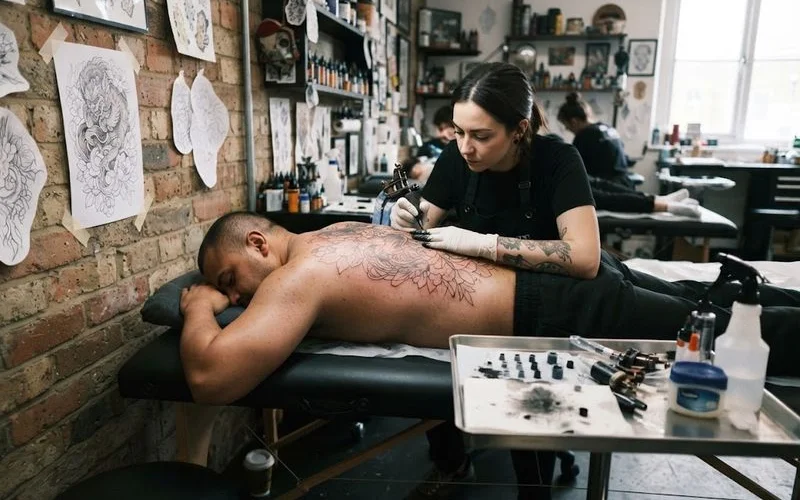
Why sessions need proper spacing
Skin needs real recovery time between sessions on the same or overlapping area, generally at least a few weeks. Tattooing over skin that hasn’t fully healed risks poorer ink retention and a rougher healing process overall, so a good artist won’t rush this even if you’re eager to finish faster. This is also why large projects realistically take months rather than weeks, regardless of how motivated you are to get it done.
Planning around a multi-session project
A few things worth settling with your artist early: a rough total session estimate (even if it’s a range rather than an exact number), how sessions will be spaced, and how pricing works across the whole project rather than session by session in isolation. Sticking with the same artist throughout is strongly recommended for anything spanning multiple sessions, since consistency in linework, shading and composition matters more the larger the piece gets.
Fitting sessions around work and life
Multi-hour sessions, especially longer full-day sittings, take a physical toll that’s worth planning around. Many people book sessions on days off rather than squeezing them around work, since the area can be sore and swollen for a day or two afterward, and driving or heavy activity right after a long sitting isn’t always comfortable. If your schedule is tight, some artists offer shorter, more frequent sessions instead of fewer long ones, which spreads the physical demand out even if it stretches the overall project timeline slightly. It’s worth discussing your own schedule constraints honestly at the planning stage so your artist can suggest a pacing that actually works for you, rather than assuming everyone wants to finish as fast as possible.
Weather and season can factor in too, particularly for pieces on areas that see a lot of sun in summer. Healing skin needs to stay covered and protected from direct sunlight, which some clients find easier to manage by scheduling sessions on areas like the torso or upper arm during cooler months, and saving more exposed placements for a season when covering up feels more natural anyway. It’s a small planning detail, but one that can genuinely affect how comfortably a long project unfolds, and most experienced artists will raise it themselves if you don’t ask first. Building this kind of pacing into the plan from day one tends to make the whole project feel far less daunting than treating it as one enormous, open-ended commitment.
Compare how different London studios structure multi-session bookings from the home page, and read more about how we assess portfolio consistency across larger projects on the scoring method page.
FAQ
- How many sessions does a full sleeve usually take?
- It varies a lot with detail level and how often you can book, but most full sleeves take anywhere from several months to over a year to finish, often across somewhere between 4 and 10 sessions depending on complexity.
- How long is a typical tattoo session?
- Most studios book sittings of roughly 3-4 hours for larger work, sometimes longer for full-day sessions on bigger pieces. Pain tolerance and skin fatigue usually set the practical limit more than the artist's schedule.
- Can sessions be spaced closer together to finish faster?
- To a point. Skin needs real time to heal between sessions on the same or adjacent area, generally a few weeks minimum, so cramming sessions too close together risks irritating healing skin and affecting the final result.
- Does a higher session count mean a better artist, or a slower one?
- Neither, necessarily. Session count mostly reflects the size, detail level and style of the piece, not the artist's skill. A highly detailed realism portrait will always need more time than a simple bold design, regardless of who's holding the machine.