Tattoo deposits and payment plans in London: what's normal
By Lena Vogel · Updated 2026-08-16
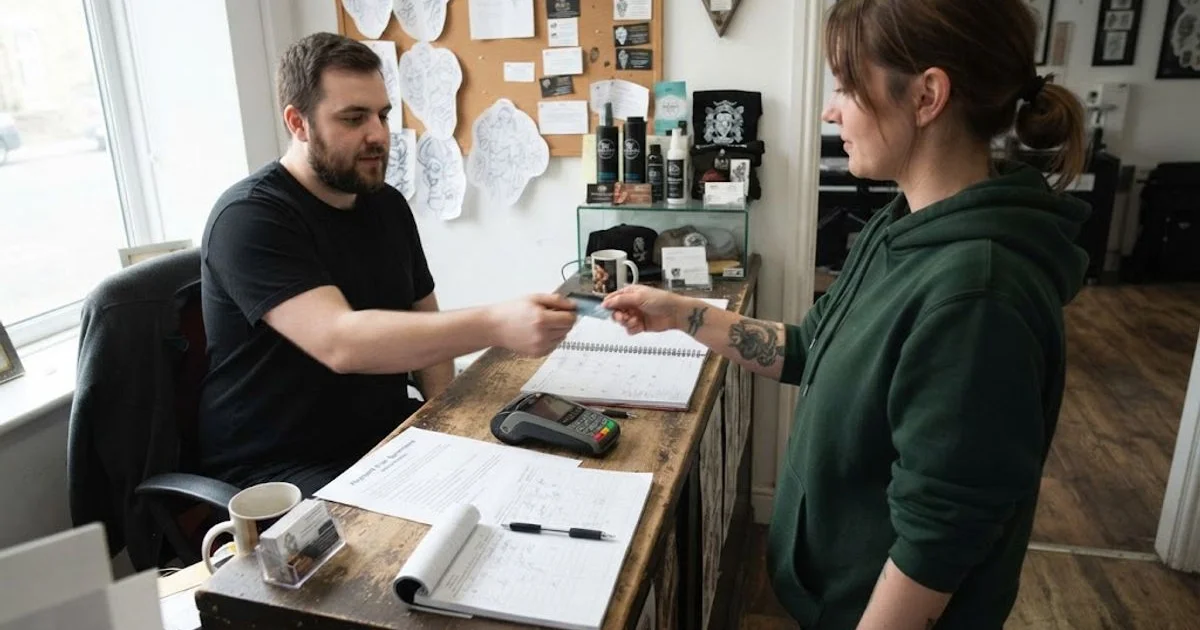
Deposits are standard practice across London tattoo studios, but the exact amount, refund policy and how it applies to your final bill vary from shop to shop. Knowing what’s typical helps you spot a reasonable policy from an unusually strict one.
What a typical deposit looks like
Deposits generally range from around £50 to £150 depending on the size and complexity of the piece, though larger custom projects sometimes carry a higher deposit reflecting the design time involved. The deposit is almost always deducted from your final bill rather than charged as an extra cost, so you’re effectively paying a portion of the tattoo upfront to secure your slot and cover the artist’s design time. For how size, style and artist experience shape that final bill, see our full tattoo cost guide.
Why studios ask for a deposit
Booking a tattoo appointment, especially for custom work, involves real time on the artist’s side before you ever sit down: sketching, revising the design, and blocking out a slot that could otherwise go to another client. A deposit protects that time investment and discourages no-shows or last-minute cancellations, which cost the studio more than just an empty chair.
| Deposit scenario | What typically happens |
|---|---|
| You show up as booked | Deposit comes off your final bill |
| You cancel with reasonable notice | Often rescheduled without losing the deposit |
| You cancel last-minute or no-show | Deposit is usually forfeited |
| You change the design significantly | Some studios may ask for an updated or new deposit |
Policies differ enough between studios that it’s worth asking directly what counts as “reasonable notice” before you book, rather than assuming.

Payment plans for bigger projects
Full sleeves, back pieces and other large-scale work are naturally paid in stages, since you’re billed session by session rather than as one upfront total. This spreads the cost out over the months or years the project takes to complete, which is one practical advantage of larger pieces over a single big payment. Some studios also offer more structured payment plan options for substantial projects, though this isn’t universal, so it’s worth asking early in the planning conversation rather than assuming it’s available.
What to clarify before you pay anything
Before handing over a deposit, get clear answers on: how much of the total it represents, whether it’s refundable or transferable if your circumstances change, and what the studio’s cancellation and rescheduling policy actually says in writing, not just verbally. A studio that puts its deposit and cancellation terms in writing, whether on a booking form or by email, is generally easier to deal with if plans change.
If the studio needs to reschedule you
Cancellations aren’t always on the client’s side. Artists occasionally need to reschedule due to illness, an emergency, or a scheduling conflict, and a reasonable studio will offer you a new slot without penalty and keep your deposit valid for the rescheduled date. If a studio cancels on you repeatedly, or is vague about when you’ll actually be seen next, that’s a fair reason to ask for your deposit back and look elsewhere. Most studios handle this professionally, since a good working relationship with clients matters more to them long-term than holding onto a single deposit.
Card payments and bank transfers are the most common ways to pay both the deposit and the final balance in London studios, and most have moved away from cash-only policies in recent years. Some studios ask for the remaining balance in cash on the day, particularly for smaller amounts, so it’s worth confirming accepted payment methods when you book rather than assuming.
Getting the studio’s deposit and payment terms in writing, even a short confirmation email, is a small step that saves confusion later. It gives you something concrete to point back to if there’s ever a disagreement about what was agreed, and most studios are happy to send this as a matter of course once you’ve booked. It costs nothing to ask for, and a studio that’s reluctant to put its own policy in writing is telling you something worth paying attention to.
Browse London studios from the home page and see how consistently reviewers describe fair pricing and clear booking terms in our scoring method breakdown.
FAQ
- Is a tattoo deposit refundable if I cancel?
- Usually not, though policies vary by studio. Most deposits are designed to cover the artist's time spent on design work and to discourage last-minute no-shows, so cancelling close to the appointment typically means losing it. Rescheduling with enough notice is often handled more flexibly.
- Does the deposit come off the final price?
- In most cases, yes. The deposit is usually deducted from the total cost of the tattoo, so you're not paying it as an extra fee on top, just an advance toward the full amount.
- Can I pay for a large tattoo project in instalments?
- Larger multi-session projects are naturally paid off in stages, since you're billed per session rather than one lump sum upfront. Some studios also offer more formal payment plan arrangements for bigger pieces, though this varies, so ask directly.
- What if I need to reschedule my appointment?
- Most studios allow rescheduling if you give reasonable notice, often keeping your deposit valid for the new date. Last-minute cancellations or no-shows are where deposits are most commonly forfeited, so check the specific studio's policy when you book.